
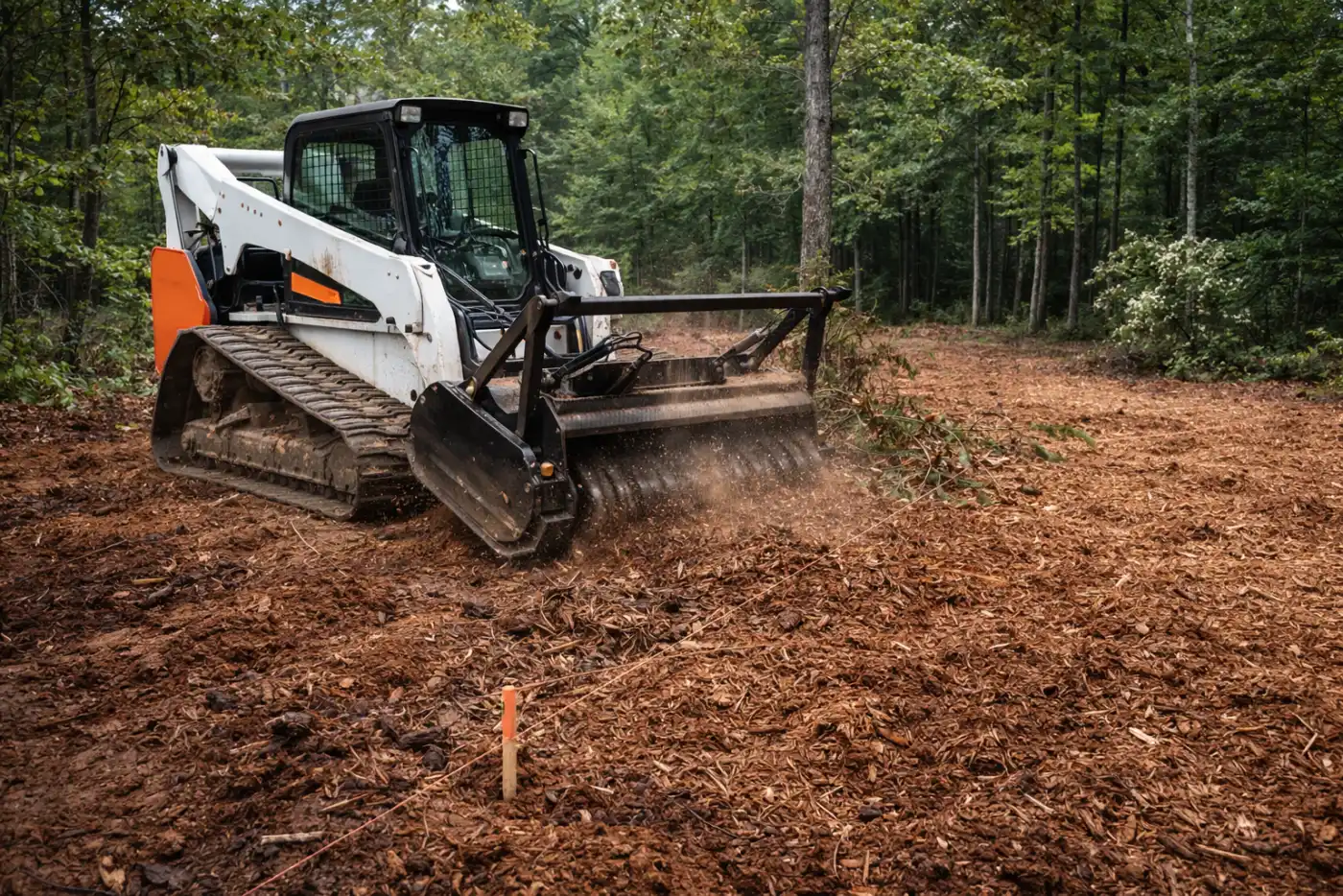
Forestry mulching uses a single machine equipped with a rotating drum and carbide teeth to grind standing trees, brush, and stumps into a layer of natural mulch—all in a single pass. The result is cleared land with a protective ground cover that prevents erosion, retains moisture, and naturally decomposes to enrich the soil.
For Western NC landowners dealing with steep terrain, sensitive soils, and environmental regulations, forestry mulching often makes more sense than traditional clearing methods. There's no need for burn pits, no hauling trucks tearing up your property, and no exposed soil vulnerable to our heavy mountain rainfall.
How Forestry Mulching Works
Our forestry mulching head mounts on a tracked carrier that can navigate slopes up to 35 degrees. The mulching drum spins at high RPM, grinding vegetation from standing trees down to ground level. Material up to 8 inches in diameter is processed in seconds, leaving behind a 2-4 inch layer of organic mulch that acts as a natural erosion barrier.
Mulching vs. Traditional Clearing
Traditional clearing requires multiple machines (feller, skidder, chipper, dozer), creates massive debris piles, and leaves exposed soil vulnerable to erosion. Forestry mulching does it all with one machine, costs less per acre on most properties, and leaves the ground protected. The trade-off: mulching doesn't remove root systems, so it's not ideal when you need a clean foundation pad—that's where our grading services come in.
When Mulching Is the Right Choice
Forestry mulching excels for: pasture reclamation, fence line clearing, creating trails and fire breaks, invasive species removal, wildlife habitat management, and preparing land for light use. For construction sites requiring excavation, we typically combine mulching for the initial clearing with conventional grading for the final site prep.
Environmental Benefits
No burning means no smoke or air quality issues. No hauling means no truck traffic on fragile mountain roads. The mulch layer prevents erosion—critical in our steep terrain—and decomposes naturally over 12-18 months, returning nutrients to the soil. Many conservation and agricultural programs recommend mulching over traditional clearing methods.